
Deep work powers your complete focus on one thing, letting you solve big problems, create amazing ideas, and get more done in less time.
Once you have trained your mind and body to do 2 hours of DEEP WORK per day you will achieve things you never thought possible:
- Accelerate your learning to gain expertise faster.
- Boost your efficiency to accomplish in 2 hours what takes others 2 days.
- Supercharge your productivity and creativity by working in your flow state.
Remarkable People Doing Deep Work Daily

- JK Rowling created the Harry Potter series which is the best-selling book series of all-time.
- She famously locked herself in hotel rooms to write the Harry Potter books.
- Credits deep work for her ability to create entire worlds on a page.

- Bill has been practicing deep work since he was a child—he used to go into the basement to think deeply about his future.
- As Microsoft boss, he would take “Think Weeks” where he goes to an isolated cabin to read, think and strategize on complex topics.

- Founded StarterStory.com by doing 2 hours of deep work everyday before his 9-5 job.
- He goes to a local cafe, puts his headphones on and focuses for 2 hours each morning.
- Huge promoter of daily deep work in the startup community.
Products To Help Your Deep Work
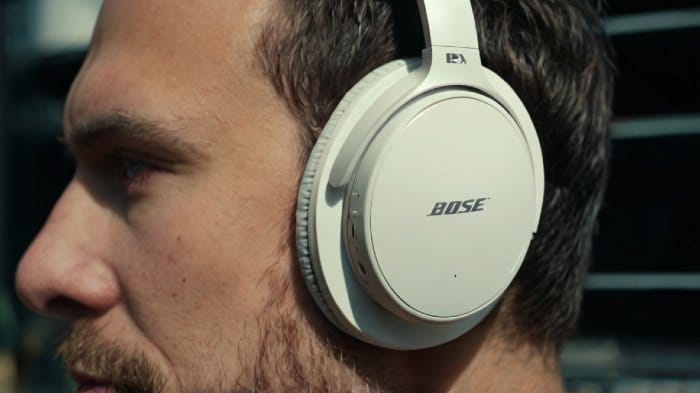

- Helps keep your focus and energy levels high by promoting better posture and circulation.

- Reduce the anxiety and distraction of constantly monitoring exact seconds.
How To Build A Deep Work Practice (6 Steps)

Building a deep work practice isn’t rocket science—but it does take some effort, a bit of discipline, and a setup that doesn’t scream “procrastinate here.”
Here’s how to make deep work part of your life without losing your sanity:
1. Define Your Goals
- Why: You need to know what truly matters to make your deep work sessions impactful.
- How: Think about the tasks that will move the needle for you—whether it’s writing, solving a tough problem, or learning a skill. Write them down so you’re clear on what deserves your focus.
2. Schedule Focused Time
- Why: If you don’t schedule it, it won’t happen. Deep work needs to be a priority in your day.
- How: Block out 1–2 hours in your calendar during the times when you feel most energized and productive. Let others know you’re unavailable, and stick to it.
3. Eliminate Distractions
- Why: You can’t focus if your phone is buzzing, or you’re constantly tempted to check emails.
- How: Create a space where you can focus—close the door, put your phone in another room, and use tools like website blockers. Make it a non-negotiable habit to remove distractions during deep work.
4. Develop a Ritual
- Why: A ritual gets your brain into focus mode and helps you start your deep work with intention.
- How: Maybe you make a cup of tea, clear your desk, or review your goals before you start. Find something simple that tells your mind, “It’s time to work deeply.”
5. Start Small and Build Consistency
- Why: You can’t jump into hours of deep work right away. It’s like training a muscle—it takes time.
- How: Start with just 30–60 minutes of focused work, and slowly build up to 2-hour sessions. The key is to show up every day and make it a habit.
6. Take Breaks to Recharge
- Why: You’ll hit a wall if you push too hard without a break.
- How: Work in focused chunks (e.g., 90 minutes), then take a 10–15 minute break to stretch, hydrate, or rest. This keeps your energy high and your focus sharp.
Types of Deep Work: Pros and Cons
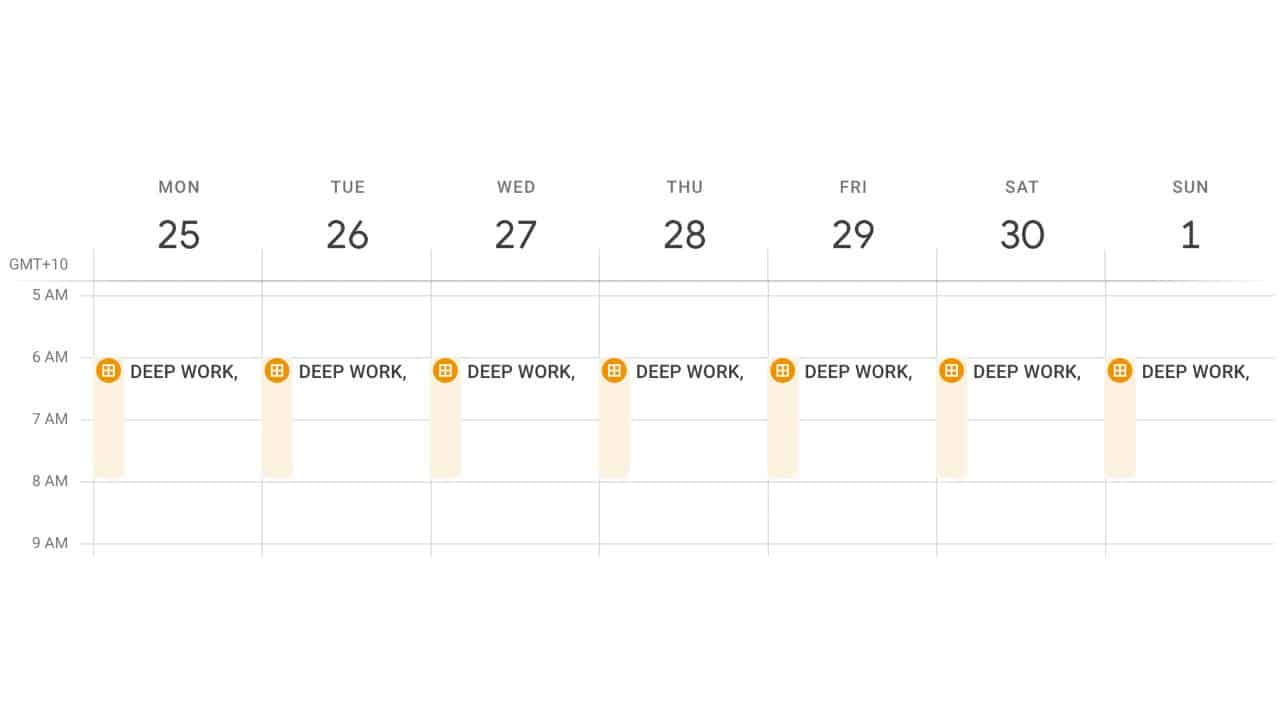
1. Scheduled Deep Work
What It Is: Blocking time in your day for deep work, like 6-8 AM every morning.
Pros:
- Creates structure and consistency in your routine.
- Helps build the habit of deep work over time.
- Easy to plan around other commitments.
Cons:
- Requires strong discipline to follow through.
- Can feel restrictive if unexpected tasks arise.
- Might not suit people with unpredictable schedules.
2. Task-Specific Deep Work
What It Is: Focusing on a single high-priority task for a 1–2 hour session, tackling it until significant progress is made.
Pros:
- Perfect for tackling big, complex problems or creative projects.
- Encourages intense focus on one goal without multitasking.
- Flexible—you can start whenever the task demands it.
Cons:
- Doesn’t fit well into a daily routine; more suitable for project-based work.
- Can lead to overworking if you stack too many sprints in one day.
3. Alternating Deep Work
What It Is: You have certain days/hours for deep work and you alternate it with certain days/hours for shallow work (e.g., emails, admin tasks).
Pros:
- Balances intense focus with lighter tasks, reducing burnout.
- Allows for recovery and processing between deep work days.
- Ideal for people juggling both creative and administrative responsibilities.
Cons:
- Harder to build momentum for deep work on “shallow work” days.
- Requires careful planning to maintain the balance.
- May feel like it disrupts flow if shallow work spills into focus days.
4. Retreats
What It Is: Dedicating extended periods (e.g., a full day or weekend) to immersive, uninterrupted deep work.
Pros:
- Best for big-picture thinking, strategic planning, or creative breakthroughs.
- Removes daily distractions, allowing you to dive deep.
- Enables flow states over long periods.
Cons:
- Impractical for regular use in a busy schedule.
- Requires significant planning and preparation.
- Can be difficult to sustain focus for extended retreats without breaks.
Deep Work Masters From History

- Field: Physics, Mathematics, Astronomy.
- Example of Deep Work: During the Great Plague of London (1665–1666), Newton retreated to his family home in Woolsthorpe, isolating himself from distractions. In this period, he developed the foundations of calculus, formulated his laws of motion, and conceptualized universal gravitation.
- Strategy: Solitary retreat allowed him to focus on abstract, groundbreaking ideas without external distractions.

- Field: Mathematics, Engineering, Physics.
- Example of Deep Work: Archimedes is said to have been so deeply immersed in solving problems that he would forget to eat or bathe. The story of his “Eureka!” moment—realizing the principle of buoyancy while in a bath—illustrates his intense focus on complex physical concepts.
- Strategy: Obsessive engagement with problems and the ability to concentrate on a single challenge

- Field: Physics, Chemistry.
- Example of Deep Work: Curie’s painstaking experiments to isolate radium and polonium required long hours in the lab, often under challenging conditions, with little concern for her own health.
- Strategy: Persistent and methodical work, dedicating herself entirely to scientific discovery.

- Field: Sculpture, Painting.
- Example of Deep Work: Michelangelo spent four years painting the ceiling of the Sistine Chapel, working under grueling conditions, often lying on his back for hours to achieve perfection.
- Strategy: Intense focus on long-term projects, committing fully to artistic mastery.

- Field: Art, Science, Engineering.
- Example of Deep Work: Da Vinci’s notebooks are a testament to his ability to focus deeply on diverse subjects, from anatomical studies to aerodynamics. For example, his detailed sketches of the human body required hours of study and dissection.
- Strategy: Multidisciplinary focus, working in isolation to explore the boundaries of art and science.

- Field: Music Composition.
- Example of Deep Work: Beethoven would take long walks in nature, carrying a notebook to jot down musical ideas. These uninterrupted sessions of walking and thinking led to some of his greatest compositions, such as his Ninth Symphony.
- Strategy: Combining physical isolation with creative focus, often shutting out external demands.
The Science Of Deep Work
Deep work isn’t just a productivity buzzword—it’s backed by science. Here’s what research tells us about why deep focus is so effective:
1. Focus Needs Space
- Did you know it takes 23 minutes to refocus after a distraction? That’s time wasted. Stop checking every notification on your phone and stay focused on your deep work.
- Source: Information and Computer Sciences
2. Practice Makes Perfect
- Want to master a skill? Research shows that uninterrupted, deliberate practice (ie. Deep Work) is the key to becoming an expert.
- Source: Gwern.net
3. Multitasking is a Myth
- Multitasking is for computers, not humans. According to Cognitive Load Theory, trying to juggle multiple tasks overwhelms your brain and leads to screw ups. Deep work eliminates the problem by letting you focus on one thing at a time, boosting your output quality and speed.
- Source: Gwern.net
4. Work Smarter, Not Longer
- Your energy, focus and alertness naturally dips and peaks during the day. This is not only due to blood sugar spikes (and drops) but also due to your body’s natural ultradian rhythms. These are 90-120 minute cycles of focus and rest. Research shows that working in these intervals makes your brain perform at its best, which is exactly what deep work encourages.
- Source: Gwern.net
5. Deep Work Creates Flow
- Have you ever been so absorbed in a task that you lose track of time? That’s called flow, and it’s where your creativity and productivity hit their peak. Deep work helps you reach this state by minimizing distractions and letting you dive into the task at hand.
- Source: Gwern.net
Why It Matters
By understanding the science behind deep work, you’re not just guessing—it’s proven that focus, deliberate practice, and structured work can transform your productivity and creativity.
Try Our 14-Day Deep Work Challenge
Use this challenge to build your deep work habit from 15 minutes to 2 hours. Each day, complete the tasks and track your progress.
Week 1: Building The Habit
Day 1 (15 Minutes)
- Find a quiet workspace.
- Choose one simple task that requires focus.
- Remove all distractions (turn off phone, clear desk).
- Set a timer for 15 minutes and work without stopping.
Day 2 (20 Minutes)
- Add 5 minutes to your focus time (20 minutes total).
- Start with a ritual (e.g., make tea, tidy desk).
- Focus on a task you can complete in this session.
Day 3 (25 Minutes)
- Remove distractions before starting.
- Choose a slightly more challenging task.
- Work for 25 minutes straight, jotting down distractions for reflection later.
Day 4 (30 Minutes)
- Extend your session to 30 minutes.
- Break a larger task into smaller steps.
- Work on one step without multitasking.
Day 5 (30 Minutes)
- Use the same 30-minute session to continue a task from yesterday.
- Stick to your ritual before starting.
- Reflect: Did you stay focused?
Day 6 (40 Minutes)
- Increase your focus session to 40 minutes.
- Choose a meaningful task you’ve been avoiding.
- Write down one thing that helps you stay in flow.
Day 7 (45 Minutes)
- Work for 45 minutes without stopping.
- Reflect on Week 1:
-
- What improved?
- What still distracts you?
Week 2: Building Endurance
Day 8 (50 Minutes)
- Plan a session to focus on a complex task.
- Work for 50 minutes, starting with your ritual.
Day 9 (60 Minutes)
- Congratulations, you’ve reached 1 hour!
- Use this time for deep thinking or creative work.
Day 10 (70 Minutes)
- Commit to a 70-minute session today.
- Take a 10–15 minute break afterward and reflect on how it felt.
Day 11 (80 Minutes)
- Work on something challenging or exciting.
- Notice how your focus feels during this longer session.
Day 12 (90 Minutes)
- Dedicate a full 90 minutes to a meaningful task.
- Break the task into steps and focus on steady progress.
Day 13 (100 Minutes)
- Push your focus session to 100 minutes.
- Reflect: How has your focus improved since Day 1?
Day 14 (2 Hours)
- Plan a 2-hour session for your most important task.
- Use everything you’ve practiced:
-
- Start with your ritual.
- Eliminate distractions.
- Dive in and stay focused.
After The Challenge
- Reflect: What worked best for you?
- Decide: Will you maintain your deep work practice? How much more have you completed in the last 14 days?
- Celebrate: You completed the 14 day deep work challenge. KEEP GOING.